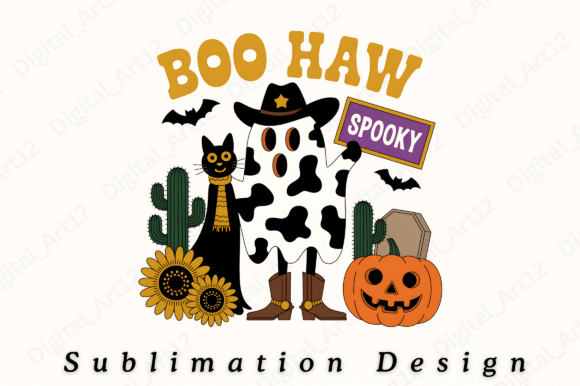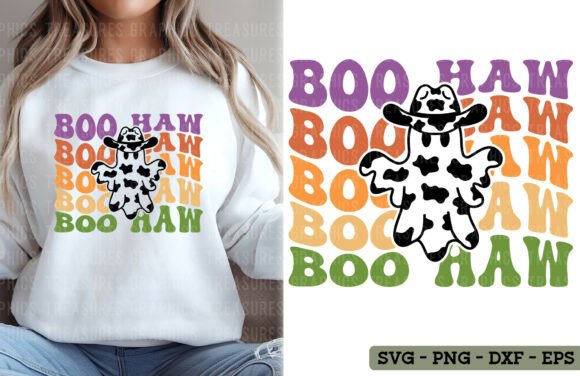
Retro Western Halloween Ghost Boo Haw
As a designer who spends more time than I care to admit staring at stitch density charts and troubleshooting thread tension, I don’t just look for pretty pictures when I’m scouting new assets. I look for viability. I need to know if a design will hold up on a busy craft fair table, if it translates well from screen to fabric, and if it has enough personality to justify the customer’s money. When I first pulled up Retro Western Halloween Ghost Boo Haw, my initial reaction wasn’t just about the holiday theme; it was about the structural integrity of the concept itself. It’s a piece that screams "market-ready," but like any good machine embroidery design, its success lies in the execution.
The visual personality of this design is distinct. It leans heavily into a vintage, almost mid-century graphic style, blending the spooky aesthetic of Halloween with the rugged, playful charm of the American West. The typography feels bold and confident, while the ghost element adds a layer of whimsy that keeps it from feeling too aggressive or dark. This balance is crucial for custom apparel and personalized gifts. You aren’t just selling a ghost; you are selling a vibe—a cozy, nostalgic, slightly humorous take on fall festivities. For an Etsy seller or a small shop product owner, this kind of clear, readable aesthetic is gold because it photographs beautifully for printable mockups and digital previews.
Real-World Application: From Screen to Stitch
Let’s talk about where this design actually lives. I recently had a scenario where a client wanted a cohesive line of Halloween merchandise for their boutique. They needed something that worked across different mediums without looking disjointed. That’s when I started thinking about how Retro Western Halloween Ghost Boo Haw could function as a central design asset.
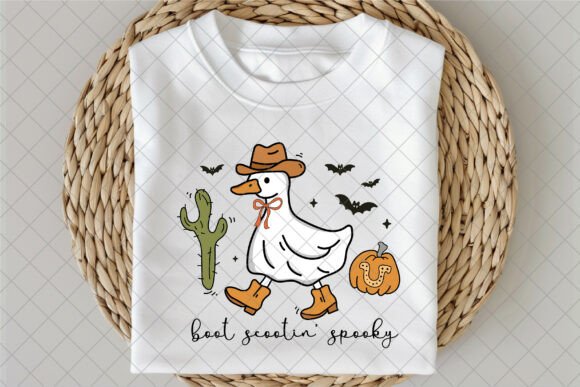
Imagine this design centered on the chest of a heather grey crewneck sweatshirt. The retro colors would pop against the muted fabric, creating an instant sweatshirt embroidery statement piece. But here is where the practical designer in me starts checking the details. If you plan to use this on a tote bag design, particularly a canvas tote, the contrast becomes even more critical. A light-colored ghost on a dark canvas might get lost if your thread colors aren’t chosen with extreme care. Conversely, placing it on a natural linen apron gives it a farmhouse-chic appeal that resonates strongly with the current handmade market trends.
I also envision this working exceptionally well as an embroidered patch. Because the design likely relies on clean lines and distinct shapes, it translates easily to iron-on or sew-on patches. These are high-margin items for craft business owners. Picture a child wearing a denim jacket adorned with this ghost patch, or perhaps stitched onto the front panel of a baseball cap. The curvature of a hat can be tricky, so testing the digitization on a curved surface early on is non-negotiable.
Technical Considerations for Embroidery Designers
While the aesthetic is strong, the devil is always in the details. When evaluating any embroidery file, I immediately look at the implied stitch types. Does this design rely too heavily on dense fill stitch areas? Or does it incorporate lighter elements like running stitch for texture or satin stitch for crisp outlines? A balanced mix ensures the final finished product doesn’t feel stiff or cardboard-like.
If this design includes small text or intricate decorative accents, you need to be wary of the hoop size limitations. Tiny details often suffer when the fabric stretches during the hooping process. My advice is to always test the design on scrap fabric that matches the weight and stretch of your final material. If you are working with a textured fabric like fleece or a thick wool blend, those tiny details might disappear entirely under the pile of the fabric. In such cases, simplifying the design or increasing the scale might be necessary to maintain stitching clarity.
Another critical factor is the stabilizer. Designs with large solid areas require robust support to prevent puckering. If you are stitching this onto a baby item like a onesie or a burp cloth, you must ensure the back of the embroidery remains soft and flexible. Using the wrong stabilizer can turn a cute gift into an uncomfortable scratch-fest, which is a fast track to negative reviews. Always inspect the underlay stitches; they are the invisible foundation that keeps the top threads lying flat and vibrant.
Fabric and Color Strategy
The success of Retro Western Halloween Ghost Boo Haw is heavily dependent on your choice of fabric texture and background color. Dark fabrics demand bright, high-contrast threads. If the ghost is white or cream, make sure your thread isn’t too pale, or it will vanish. On the other hand, if you are using this on a light-colored kitchen towel or tea towels, you have more freedom to use darker, richer tones for the western elements, creating a striking visual anchor.
I also recommend running a black-and-white mockup of the design before you commit to thread choices. This helps you evaluate the composition and balance without the distraction of color. Does the eye travel naturally through the design? Is there enough negative space? If the design feels cluttered in grayscale, it will likely feel cluttered in color, regardless of how pretty the threads are.
Commercial Viability and Brand Consistency
For the creative entrepreneur looking to scale, consistency is key. This design fits seamlessly into a broader autumn or Halloween collection. It pairs well with other rustic, vintage-themed graphics, allowing you to create a unified brand identity across multiple products. Whether you are listing a holiday embroidery kit or selling pre-made custom apparel, having a recognizable style helps build trust with your buyers.
However, before you start mass-producing, double-check the licensing terms. Just because a file is available for purchase does not automatically grant commercial rights for unlimited production. As a professional, you must confirm whether you are allowed to sell finished items made from this digital embroidery file. Misunderstanding these terms can lead to serious legal issues down the road. Protect your commercial embroidery business by reading the fine print.
Final Verdict
Retro Western Halloween Ghost Boo Haw is more than just a seasonal novelty; it is a versatile tool in the modern embroiderer’s arsenal. It captures a specific mood—playful, nostalgic, and distinctly American—that resonates with a wide audience. From apparel decorators looking to refresh their fall inventory to hobbyists wanting to create unique personalized gifts for friends, this design offers a solid foundation for creativity.
By paying attention to the technical aspects—hoop size, stabilizer choice, thread contrast, and fabric compatibility—you can transform this graphic into a high-quality handmade product that stands out in a crowded marketplace. Test it thoroughly, respect the limits of your machine, and let the design’s inherent charm do the heavy lifting. When executed with care, this piece has the potential to become a bestseller in your small shop catalog, bringing both joy to the wearer and value to your brand.